

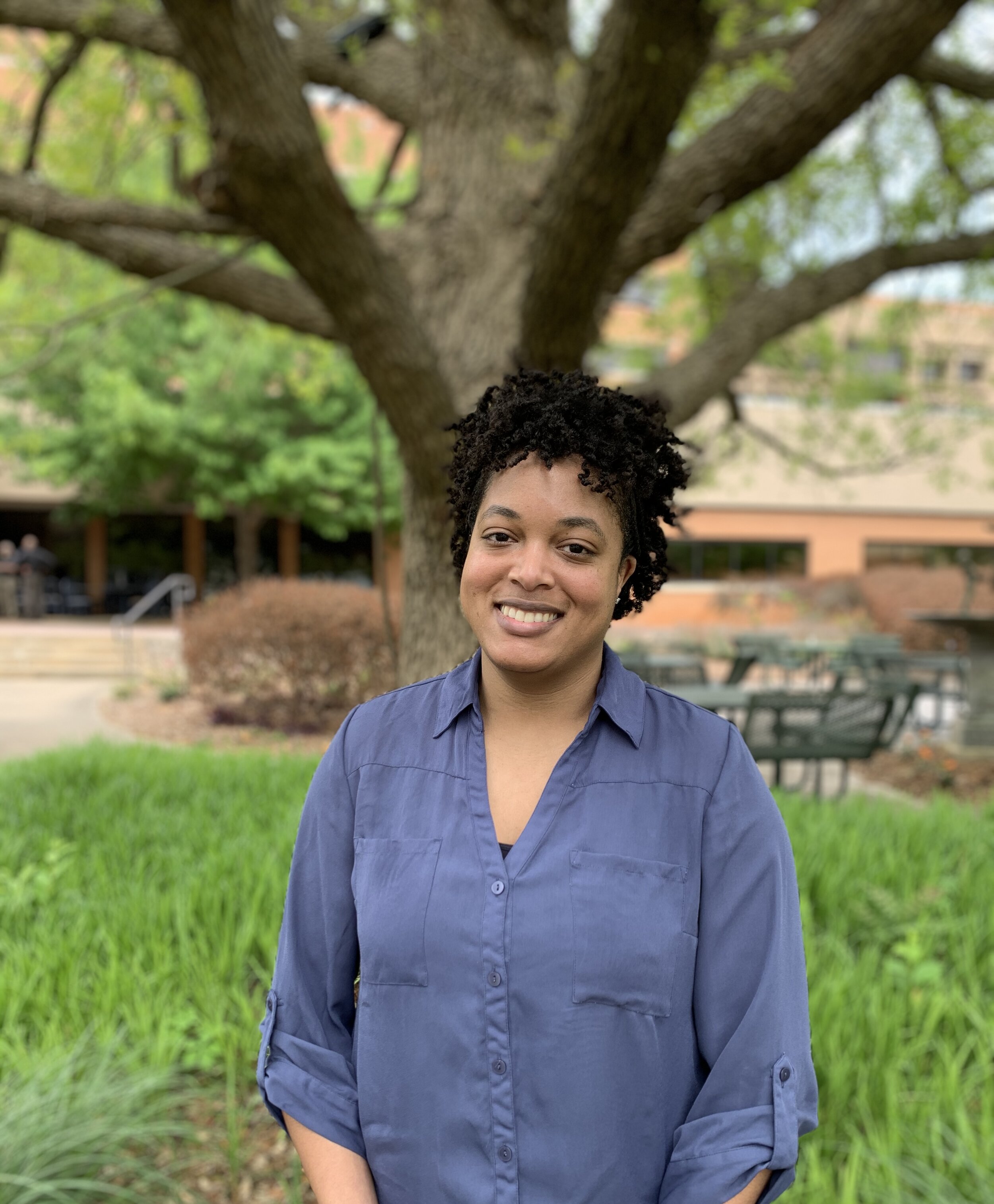
Dr. Trenesha Hill is a Louisiana native and clinical psychologist with expertise in autism and other neurodevelopmental disabilities. She has experience providing clinical services, conducting psychological assessments, and conducting research in academic medical center settings. Her professional work has focused on promoting the social-emotional development, mental health, and academic functioning of children with neurodevelopmental disabilities, including autism and ADHD, as well as children from underserved and historically marginalized communities.
Dr. Hill's research has examined mechanisms of psychopathology in youth with autism, disparities in autism identification and diagnosis, and the translation of evidence-based interventions into community settings. Her work has included collaborations across clinical, educational, and community settings, with a particular interest in improving access to appropriate identification and support for children and families.
Dr. Hill started her postsecondary education at Tulane University in New Orleans. As the older sister of an individual with cerebral palsy and learning disabilities, she began college with the goal of helping children with developmental disabilities by becoming a pediatrician. She initially pursued a pre-medical course of study, majoring in Cellular and Molecular Biology.
As she progressed through her pre-medical courses, Dr. Hill became increasingly interested in psychology and began taking psychology courses as electives. During her junior year, she shadowed a psychologist at the Autism Center at Children's Hospital New Orleans, which solidified her decision to pursue a career in psychology. As a senior, she completed an independent research study examining factors associated with anxiety in autistic children, which sparked her passion for research.
She graduated from Tulane University with a double major in Psychology and Cellular and Molecular Biology.
After graduating from Tulane, Dr. Hill worked for Head Start and for an organization providing home and community-based services to individuals with developmental disabilities. Motivated by her desire to serve children with developmental disabilities and children from socioeconomically disadvantaged backgrounds, she returned to Tulane for graduate training in psychology. She completed the 4+1 master's program in Psychology before continuing into the PhD program in School Psychology.
During her graduate training, Dr. Hill's research career flourished, and she received several grants supporting her research. She completed her professional training with a combined clinical and research postdoctoral fellowship in Autism Spectrum Disorder and Neurodevelopmental Disorders at Children's Hospital Colorado.
Dr. Hill continues to be passionate about improving access to high-quality, culturally responsive assessment, intervention, and educational resources for children with neurodevelopmental disabilities and their families.
Licensure:
Licensed Psychologist: Nebraska, Iowa, Arkansas
Education:
2010 B.S. (Psychology and Cellular and Molecular Biology) - Tulane University, New Orleans, LA
2013 M.S. (Psychology) - Tulane University, New Orleans, LA
2018 Ph.D. (School Psychology) - Tulane University, New Orleans, LA
2018-2020 - Postdoctoral Fellowship, Autism Spectrum Disorder and Neurodevelopmental Disorders Track, Children’s Hospital Colorado
Select Scholarly Works:
Pickford, D. Y., Hill, T. L., Arora, P. G., & Baker, C. N. (2021). Prevention of conduct problems in integrated pediatric primary care. In W. O’Donohue & M. Zimmermann (Eds.), Handbook of Evidence-Based Prevention of Behavioral Disorders in Integrated Care. New York: Springer.
Hill, T. L., White, T.C., Anthony, B., Reaven, J., Harris, B., Reyes, N., & Anthony, L. G. (2021). Disparities in autism spectrum disorder diagnoses among 8-year-old children in Colorado: Who are we missing? Autism, 25(1), 102–113. https://doi.org/10.1177/1362361320950058
Harris, B., Reyes, N., & Hill, T. L. (2020). Clinical and school identification and intervention for youth with ASD: Culturally and linguistically responsive interdisciplinary considerations. In M. McClain Verdoes, K. Mezher, & J. Shahidullah (Eds.). Interdisciplinary Care Coordination for Youth with Autism Spectrum Disorder. New York: Springer.
Smith, T., Hill, T. L., White, T. C., Reaven, J., Harris, B., Reyes, N., Anthony, B. J. Anthony, L. (2020, May). Missed diagnoses of autism spectrum disorder after initial negative developmental evaluation. Poster e-presented at the International Society for Autism Research. Seattle, Washington.
Hill, T. L., White, T.C., Harris, B., Robinson Rosenberg, C. & Anthony, L. (2019, May). Factors associated with missed ASD identification among children in Colorado. Poster presented at the International Society for Autism Research. Montreal, Canada.
Hill, T.L., Kenworthy, L., Anthony, B. J., Troxel, M., Verbalis, A., & Anthony, L. (2019, May). The moderating effects of implementation factors on improvement in classroom behaviors in Unstuck and on Target and Contingency Behavior Management. Poster presented at the International Society for Autism Research. Montreal, Canada.
Baker, C. N., Saybe, M., Black, C. L., Coriano, V., Hill, T. L., & Moberg, S. (2019, March). A pilot feasibility study of the Pre-K TIPS coaching model in preschools serving low-income children. Poster presented at the biennial meeting of the Society for Research in Child Development, Baltimore, MD.
Hill, T. L., Obstfeld, R. S., Kupersmidt, J. B, & Baker, C. N. (2017, May). Ecological correlates of teacher (mis)perceptions: Understanding discrepancies in teacher predictions of low-income preschoolers’ pre-academic skills. Poster presented at the biennial meeting of the Society for Prevention Research. Washington, D.C.
Hill, T. L., Gray, S. A.O., Baker, C. N., Boggs, K., Carey, E., Johnson, C., Kamps, J., & Varela, R. E. (2017). A pilot study examining the effectiveness of the PEERS program on social skills and anxiety in adolescents with autism spectrum disorder. Journal of Developmental and Physical Disabilities, 29(5), 797-808. https://doi.org/10.1007/s10882-017-9557-x